Sun, 29 Nov 2026
post
Bangladesh

Hasina assures no shortage of essential commodities during Ramadan

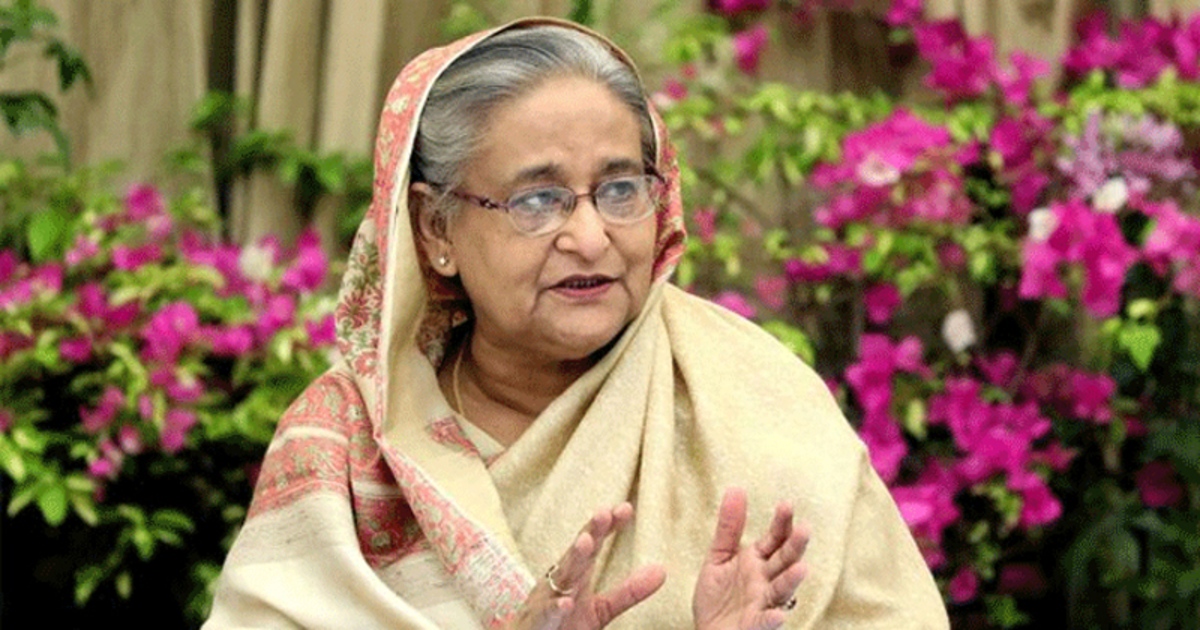
Dhaka, February 23, 2024— Prime Minister Sheikh Hasina unequivocally assured the nation that there will be an ample supply of essential commodities during the Holy Month of Ramadan. Addressing the media at a press conference held at Ganobhaban on Friday, she underscored the government's unwavering commitment to ensuring a stable and sufficient provision of goods, including gram, dates, sugar, and other essentials throughout the sacred month.With confidence, Prime Minister Sheikh Hasina declared, "There will be no shortage of anything, particularly essential commodities, in Ramadan. All necessary arrangements have already been meticulously put in place, and I assure you there will be no problems encountered in meeting the demands of the public."The Prime Minister gave this assurance while briefing newsmen about her recent visit to Germany, where she attended the Munich Security Conference 2024 and held bilateral meetings with several global leaders. Sheikh Hasina, also the president of the ruling Awami League, addressed the press for the first time since winning the twelfth parliamentary election and forming the government for the fourth consecutive time.During her stay in Munich, Sheikh Hasina participated in the Munich Security Conference, engaging in discussions with global leaders on various international issues.The press conference covered a range of topics, with the Prime Minister addressing questions about commodity prices, illegal hoarding, and market conditions. Responding to inquiries, Sheikh Hasina highlighted the positive changes that have occurred in the last 15 years, particularly in addressing rice shortages.In response to questions about a potential conspiracy to topple the government and create famine, Prime Minister Sheikh Hasina acknowledged a past conspiracy to prevent the election. She emphasized that the conspirators aimed to dissociate the government from the people by manipulating the prices of goods.The Prime Minister also alluded to incidents of arson terrorism in preceding years, revealing, "The intention was to destabilise the government. You are well aware of those involved. I refrain from naming individuals, but it is imperative to acknowledge that the scheme persists."Sheikh Hasina expressed concern about the manipulation of commodity prices and mentioned the onion crisis, pointing out the sudden shortage and subsequent wastage of a significant quantity of onions."What actions should be taken against these individuals? It would be more effective if the public takes steps towards a solution. In that case, no one can raise objections," she remarked.The premier also said that there was no discussion about Bangladesh's election during the meeting with global leaders on the sidelines of Munich Security Conference in Germany.In replying to a query, Sheikh Hasina, who become Prime Minister for the fourth time in a row, said that there was no talk with them about the election. "They have no worry, no comment, no question about the election," she said, adding, "There was no talk about the election, most of the talk was bilateral."The Premier said, "We have state-level relations with the European countries, we have an advantage because of personal relations. No one spoke about the election. They themselves knew that I would win the election."She continued, "Those who don't want (to see me in power again) they speak about it."Sheikh Hasina said that the election of the countries which took 10/12 days to announce the election results is free and fair.Besides, in Bangladesh result came within 24-48 hours of election, which is not free and fair, she said, adding, "We don't have any medicine for this disease. I believe that our strength is our people."Sheikh Hasina said, "We have a good friendship with European countries. France to give us US$ 1 billion for climate change."Replying to another question regarding the goal in this new tenure of her government, Sheikh Hasina said that her goal is to maintain the democratic trend that Bangladesh is now enjoying and execution of the status of developing nation which is scheduled to begin officially in 2026.

post
Bangladesh

Split in JaPa: Rawshan's faction gains strength, Quader's camp weakens

Dhaka, February 23, 2024— The Jatiya Party (JaPa) is grappling with internal conflicts, primarily starting from the aftermath of the twelfth parliamentary election. The political turbulence is marked by a power struggle between the supporters of Rawshan Ershad, the chief patron of the party, and those aligned with G.M. Quader, the party chairman.Rawshan Ershad's supporters have been steadily gaining momentum, raising concerns about the internal stability of the party. In contrast, the party under the leadership of G.M. Quader is witnessing a gradual weakening, as successive leaders show signs of internal vulnerability.The ongoing power struggle has fueled anticipation among the faction perceived as powerless. There is a prevailing sentiment that, should this faction secure a favorable position, Rawshan Ershad's supporters could become a dominant force within JaPa under her leadership.Leaders of JaPa maintain that, in terms of numerical strength, the majority is still associated with G.M. Quader. Despite this, the organizational perspective paints a different picture, with the weakened party facing additional challenges. Co-chairman Abul Hossain Babla and presidium member Shafiqul Islam Sentu, both aligned with Rawshan Ershad, attend meetings with a considerable show of manpower. This trend is further exemplified by the presence of Selim Osman, Saifuddin Milon, and Kazi Firoz Rashid, with only Selim Osman currently siding with G.M. Quader.G.M. Quader's camp argues that the organizational situation of the party has been weak from its inception. Leaders who were candidates in the twelfth parliamentary election express discontent with G.M. Quader's leadership, particularly in terms of financial benefits. As a consequence, they are progressively shifting their allegiance to Rawshan Ershad, contributing to a decline in G.M. Quader's organizational strength.The internal discord within JaPa deepens as leaders associated with G.M. Quader contend that the party's organizational condition has been inherently weak. Those who were candidates in the twelfth parliamentary election are increasingly dissatisfied with the leadership, leading to a shift in support toward Rawshan Ershad. Despite G.M. Quader's presence in the party leadership and parliament, the organizational strength of JaPa continues to dwindle.As the power dynamics within JaPa undergo significant shifts, predicting the party's future trajectory remains challenging. G.M. Quader is currently taking measures to analyze the evolving situation by organizing various meetings and discussions in the capital.Responding to the situation, G.M. Quader states that he is unfazed by the affiliations of Rawshan Ershad's supporters. He dismisses concerns about their authority to convene a conference, emphasizing that only the party holds the sole authority to do so. G.M. Quader remains focused on the party's internal processes and maintains that their authority will be exercised through the proper channels, irrespective of external developments.

post
Bangladesh

Sheikh Hasina affirms commitment to sovereignty, emphasises defense capability

Dhaka, February 22, 2024— In a resolute statement, Prime Minister Sheikh Hasina of Bangladesh reiterated the country's steadfast commitment to avoiding warfare while emphasising the need to bolster its defense forces for the protection of independence and sovereignty. The prime minister made these remarks today, February 22, during the commemoration of the Golden Jubilee of the enactment of the Territorial Waters and Maritime Zones Act, 1974, by Bangabandhu Sheikh Mujibur Rahman.The event, held at the Bangabandhu International Conference Center (BICC) and chaired by State Minister for Shipping Khalid Mahmud Chowdhury, witnessed Prime Minister Hasina highlighting the government's dedication to realising the Forces Goal 2030, a strategic plan formulated following the principles set by Bangabandhu. Emphasising the importance of attaining capabilities as an independent nation, she assured that Bangladesh is actively working in that direction.“We shall refrain from entering into conflicts with any entity; however, it is imperative that we acquire the necessary capabilities to safeguard our independence and sovereignty," stated Prime Minister Hasina, underscoring the nation's commitment to maintaining peace while ensuring its capacity for self-defense.Addressing the significance of the Territorial Waters and Maritime Zones Act, 1974, Prime Minister Hasina affirmed that it continues to serve as a crucial guideline for the country. She highlighted the economic benefits derived from the vast maritime areas acquired by Bangladesh, expressing optimism about their substantial contribution to the nation's economy.The program also featured insights from key figures, including Shipping Secretary Md. Mostafa Kamal and Naval Chief Admiral M Nazmul Hassan. Rear Admiral (Retd) Md Khurshed Alam, Secretary (Maritime Affairs Unit) at the Ministry of Foreign Affairs, presented a comprehensive keynote paper. The occasion included the screening of an audio-visual documentary, providing a visual narrative of Bangladesh's maritime achievements.Prime Minister Hasina concluded the event by visiting various stalls within the program premises.

post
Women and children

AL generates TK 7.75 crore as 1549 women seek nomination for Reserved Seats

Dhaka, February 8, 2024— In the fervent pursuit of securing the ruling party’s tickets for the coveted women's reserved seats in the 12th parliament, Awami League has experienced an unprecedented surge in enthusiasm. A remarkable 1549 women have actively engaged in this democratic process by acquiring nomination forms. Over the last three days, starting from Tuesday, the party has generated a total of TK 7.75 crore through the sale of nomination forms.Awami League's General Secretary, Obaidul Quader, disclosed this information during a press briefing held at the central office of the party in Bangabandhu Avenue, the capital, on Thursday. The diverse group of women seeking nomination forms includes former Members of Parliament (MPs), renowned showbiz stars, social activists, and notable personalities from the entertainment industry.A noteworthy aspect of this electoral process is the active participation of showbiz celebrities, with a total of 15 stars collecting nomination forms with the aspiration of securing an Awami League ticket to enter the parliament.The sold nomination forms amount to a staggering TK 7.74 crore and cover a total of 50 reserved seats. Out of these, the Awami League will distribute 48 reserved seats among its women leaders on February 14.The competition for these highly sought-after reserved seats has escalated since the initiation of the nomination form sale by the ruling Awami League on Tuesday. On the first day alone, the party sold 810 forms, accumulating a substantial income of TK 4.5 crore. The momentum continued on the second day, with 522 forms sold, resulting in a total income of TK 2.61 crore and the party sold 217 nomination forms on the last day.Besides, in their quest for nominations, these aspiring candidates have been actively participating in various events at the Gano Bhaban and AL Chief Sheikh Hasina's Dhanmondi political office. Additionally, they are making visits to the residences of influential AL leaders, underscoring their commitment to securing a spot in the upcoming parliamentary assembly.Sources within the Awami League suggest that female leaders who were initially nominated but withdrew due to seat-sharing arrangements with the alliance will be given priority in the selection process. As a dominant political force, the Awami League plans to prioritise nominating new faces, particularly those who were deprived in the previous years. Individuals nominated by the party in the last national elections but subjected to deprivation and those who later supported the alliance candidate after winning the party's nomination are likely to be endorsed and nominated to compete for the reserved seats. The AL's strategic moves reflect its commitment to fostering fresh talent and recognizing the resilience of women leaders in the political landscape.Key leaders of the Awami League emphasise that 5-7 leaders from the Awami League Central Working Committee may secure positions in the parliamentary assembly through these reserved seats. This includes female leaders at the district level, former and current leaders of the Bangladesh Mohila Awami League and the Jubo Mohila League, as well as individuals from various cultural and entertainment backgrounds.

post
News

Education Ministry Forms Coordination Committee for Evaluation System and Curriculum

Dhaka, February 04, 2024— In a significant development aimed at enhancing the education system in the country, the Ministry of Education has announced the formation of a coordination committee tasked with overseeing the evaluation system and curriculum. The decision was made during a meeting chaired by Education Minister Mohibul Hasan Chowdhury Nowfelat at the Secretariat on February 4th.According to a press release issued by the ministry, the newly formed committee will be led by an additional secretary, playing a crucial role in streamlining the evaluation process and curriculum development. The move is part of the ministry's commitment to ensuring a robust and effective education system that meets the evolving needs of students and aligns with global standards.The committee will include representatives from key entities such as the National Curriculum and Textbook Board (NCTB), various departments under the education ministry, and representatives from the education boards. This diverse composition is designed to bring together expertise from different areas to contribute to the comprehensive evaluation and improvement of the education system.Among the notable members of the committee are Secondary and Higher Secondary Education Secretary Soleman Khan, Technical and Madrasha Education Secretary Farid Uddin Ahmed, along with senior officials from the ministry, NCTB, Dhaka Education Board, and other relevant departments. Their collective expertise and experience will play a pivotal role in shaping the future direction of education in the country.This move underscores the government's commitment to fostering a collaborative and consultative approach to education reform. By bringing together stakeholders from various domains, the coordination committee aims to address challenges and identify opportunities for improvement in the current education system.As the committee begins its work, it is expected to conduct a thorough review of the existing evaluation system and curriculum, identifying areas that require enhancement and modernization. The collaborative effort is a testament to the government's dedication to providing quality education that equips students with the skills and knowledge necessary for success in the rapidly changing global landscape.The Education Ministry encourages all stakeholders and the public to stay updated on further developments through The Business Standard's Google news channel. This initiative reflects a transparent and inclusive approach to education reform, inviting engagement and feedback from the wider community.With the coordination committee in place, the Ministry of Education is poised to usher in positive changes that will contribute to the overall improvement of the education system, benefitting students and the nation as a whole.

post
Bangladesh

AL aims to foster competition in Upazila polls

Dhaka, February 4, 2024— In a bid to ensure the upcoming Upazila Parishad elections are free, fair, credible, and competitive, the ruling Awami League has adopted a groundbreaking non-partisan approach, a move welcomed by party insiders. The decision aims to promote inclusivity and transparency in local governance, breaking away from traditional party practices.The Awami League's high-ranking officials have expressed their commitment to making the local body elections a model of legitimacy, free from doubts about fairness. However, challenges loom large as the Bangladesh Nationalist Party (BNP) and several other parties have announced their intention to boycott the elections, presenting a new obstacle for the ruling party.Scheduled for March, the upcoming Upazila Parishad elections mark the first time candidates will be nominated by political parties, a strategic departure from past practices. This shift seeks to encourage active participation from various political entities, fostering a democratic environment that enhances voter turnout.The decision comes on the heels of the controversy surrounding the last general elections, where low voter turnout sparked criticism from both local and international communities. The Awami League insiders acknowledge that the criticism has played a significant role in steering the party toward a non-partisan approach for the upcoming local body elections.To ensure a competitive electoral landscape, the ruling party is actively encouraging opposition BNP members to contest independently, a move confirmed by several party policymakers. Members of the grand alliance, allies of the Awami League, are also urged to participate independently, indicating a departure from the usual coalition strategy.The Awami League recognises the potential for violence if only their candidates participate, and is determined to avoid a repeat of one-sided elections. Party insiders reveal a strong desire for law enforcement to play a stern role in maintaining order during the elections.Responding to inquiries, AL Presidium Member Jahangir Kabir Nanak stated, "Our main objective is to make the upcoming local body elections free, fair, and competitive, allowing candidates from all political parties to participate without intimidation." Nanak stressed that this move signals a commitment to strengthening local governance and ensuring democratic values prevail at the grassroots level.AL Joint General Secretary AFM Bahauddin Nasim echoed these sentiments, emphasizing that the decision to refrain from endorsing party candidates aims to encourage competition and the active participation of other political parties. Nasim, also a member of the ruling party's nomination board for local government elections, highlighted that adopting a non-partisan approach will contribute to minimizing intra-party conflicts within the Awami League.Besides, the main opposition BNP on Thursday announced it would not join any election held under the present government and with the present election commission.Talking to this correspondent, BNP's Senior Joint Secretary General, Ruhul Kabir Rizvi, asserted, "We will refrain from participating in any election under Sheikh Hasina, as past elections were not conducted in a free, fair, and credible manner, and we anticipate a similar scenario in the future."Rizvi also commented on the ruling Awami League's decision to conduct the upcoming Upazila Parishad elections in a non-partisan manner, suggesting that it was prompted by the rejection of their party symbol, the Nouka (Boat), by the people of the country.However, he added that any grassroots leader from the BNP desiring to participate in the local body polls would need to resign from the party.There are 492 upazilas in the country and the election will be held in five phases in 481 upazilas. The election commission plans to conduct the polls in four phases in 464 upazilas within March while the rest will be carried out after Eid-al-Fitr.All the 14 allies of the Awami League took part separately in all the local government elections except a few city corporation polls earlier. They will join the upazila polls separately again.In the 2019 upazila parishad elections across 473 upazilas, candidates affiliated with the ruling Awami League clinched victory in 320 chairmanship positions, with 115 uncontested. Out of these, 136 individuals, running as independent candidates, emerged victorious, the majority of whom were supporters or leaders of the Awami League.Ends//Jakir

post
International

US State Department Affirms Commitment to Collaboration with Bangladesh Despite Election Concerns

NRBC DESK— In a regular briefing at the State Department on Thursday, US State Department spokesperson Matthew Miller underscored that the apprehensions raised regarding the national polls in Bangladesh do not exempt the United States from its obligation to engage in cooperation with the country.During the briefing, a journalist inquired about the US interest in partnering with Bangladesh on diverse security fronts such as counterterrorism, border security, cyber security, maritime security, and regional stability. The journalist raised a poignant question, questioning how such collaboration could unfold in a broader context without extending a welcome to the prime minister, alluding to the recent Bangladeshi election.In response, Miller elucidated, "We maintain similar relationships worldwide. While expressing concerns about the Bangladeshi election and crackdowns within the country, it does not absolve us of our responsibility to interact with the government. This engagement entails addressing areas of concern and identifying opportunities for cooperation on shared priorities."Furthermore, another journalist delved into the situation in Myanmar during the briefing, shedding light on the ongoing conflict and the potential influx of Rohingyas into Bangladesh, accompanied by military personnel using helicopters. When pressed for comments on the situation, Miller conveyed that he would address the Myanmar issue at a later time, leaving the matter open for future discussions and updates.

post
Bangladesh

PM Hasina guides Bangladesh to unprecedented development in 15 years: Broadcasting minister

Dhaka, Feb-01, 2024— In a landmark ceremony at the newly renovated Shaheed Dr Fazle Rabbi Park in Gulshan, State Minister for Broadcasting and Information, Mohammad Ali Arafat, underscored the unparalleled shift in the nation's mindset as a cornerstone of Bangladesh's remarkable development over the past 15 years.Speaking at the inauguration, Minister Arafat attributed this significant change to the visionary leadership of Prime Minister Sheikh Hasina. He declared, "Bangladesh, under Prime Minister Sheikh Hasina's guidance, has achieved unprecedented development in the last 15 years. The most remarkable aspect is the massive transformation in people's mindset."Arafat went on to express the newfound ability of the nation to dream big and turn those dreams into reality. He remarked, "We can now dream big and translate our dreams into reality. From this point of view, the government has announced its new vision of building 'Smart Bangladesh' after successfully implementing 'Digital Bangladesh.'"Dhaka North City Corporation (DNCC) Mayor, Md Atiqul Islam, graced the occasion as the chief guest, joined by distinguished speakers including Professor of Architecture at Bangladesh University of Engineering and Technology (BUET), Dr SM Nazmul Imam, DNCC's reserved ward number 7 councilor Amena Begum, Niketon Society president Dr MA Bashar, DNCC Chief Executive Officer Mir Khairul Alam, Fazle Rabbi's son Omar Rabbi, and DNCC ward number 19 councilor Mafizur Rahman.Minister Arafat highlighted past accomplishments that were once deemed impossible, such as the construction of the Padma Bridge with domestic funds, achieving 100% electricity coverage, and the successful completion of the metro-rail project. He noted that these achievements not only demonstrated the government's capabilities but also inspired courage and transformed mindsets.Expressing gratitude for the park's eco-friendly features, Arafat commended the efforts of the renovators and acknowledged the park's name honoring Shaheed Dr Fazle Rabbi, a martyr of the 1971 Liberation War.The formal inauguration involved the unveiling of a plaque on the park premises by the DNCC mayor and the state minister. Following this, they, along with other dignitaries, took a comprehensive tour of the revitalized park, symbolizing a commitment to creating green spaces that align with the evolving vision for a 'Smart Bangladesh.'

post
NRB Success

Saima Wazed Assumes Key Role as WHO South-East Asia Regional Director

Dhaka, Feb 01, 2024—In a groundbreaking development, Saima Wazed, a globally recognized mental health expert and autism advocate, has officially assumed the position of Regional Director for South-East Asia at the World Health Organization (WHO). The announcement comes after a unanimous vote during the 76th session of the WHO Regional Committee for the South-East Asia Region on January 1, 2024, followed by approval at the 154th session of the WHO Executive Board in Geneva, Switzerland, on January 22-27.Saima Wazed, the daughter of Prime Minister Sheikh Hasina of Bangladesh, is not only the first individual from Bangladesh to hold this esteemed position but also the second woman to lead the WHO South-East Asia Region. Her extensive expertise in autism and her significant contributions to global mental health have garnered international acclaim.Health and Family Welfare Minister Professor Dr. Samanta Lal Sen extended his warm congratulations, emphasizing Wazed's global reputation and experience in the field of world health. He expressed, "Saima Wazed is widely known globally as an autism expert, and she is a very experienced person in the field of world health."The voting process, held in New Delhi, included the participation of member states such as Bangladesh, Bhutan, DPR Korea, India, Indonesia, Maldives, Nepal, Sri Lanka, Thailand, and Timor-Leste. Wazed secured a decisive eight votes, while the alternative candidate, Dr. Shambhu Prasad Acharya, nominated by Nepal, received two votes.As Saima Wazed embarks on her five-year term, she will succeed Dr. Poonam Khetrapal Singh as the outgoing Regional Director of the WHO South-East Asia Region. This transition marks a significant milestone and honor for the region.Wazed's dedication to mental health is not only reflected in her new role but also in her position as an advisor to the WHO's Director-General for mental health. Her commitment to addressing global health challenges, particularly in the context of mental health, positions her as a key influencer in the international health arena.The South East Asia Regional Organization (SEARO), one of the six regions of WHO with its headquarters in New Delhi, encompasses 11 countries, including Bangladesh, Bhutan, DPR Korea, India, Indonesia, Maldives, Myanmar, Nepal, Sri Lanka, Thailand, and Timor-Leste.Saima Wazed's leadership is expected to bring fresh perspectives and strategies to address the health challenges facing the region. The global community eagerly anticipates the positive impact of her tenure as the WHO South-East Asia Regional Director.

post
Bangladesh

BNP calls for black-flag protests nationwide, demanding fresh election

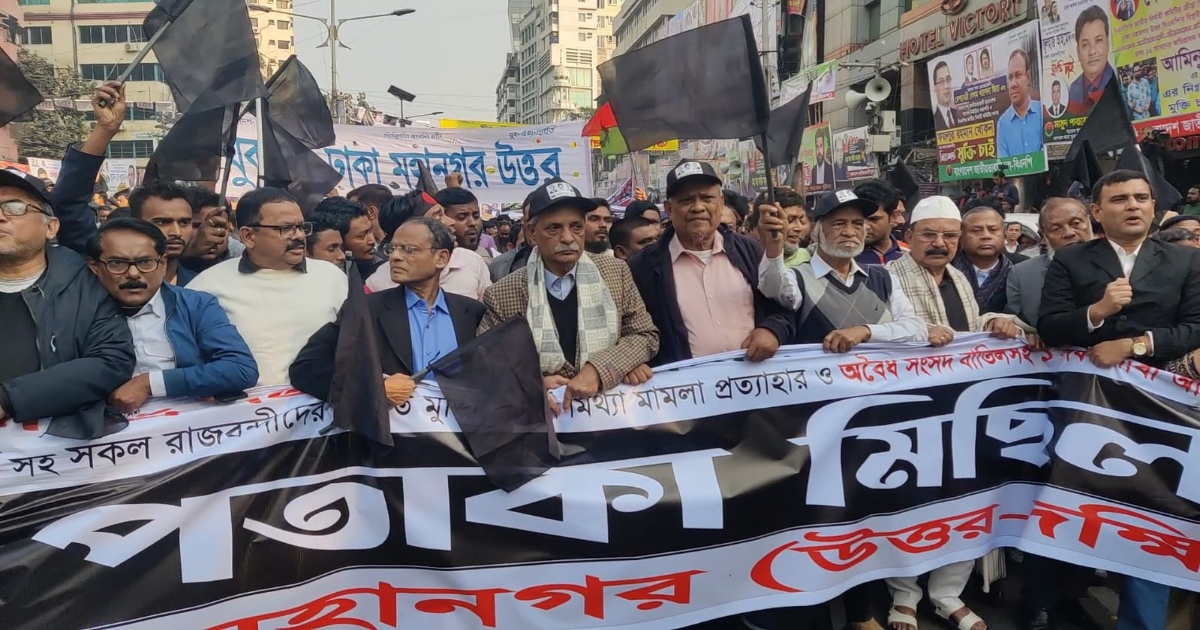
Dhaka, January 27, 2024— In a move aimed at expressing discontent and pushing for their demands, the Bangladesh Nationalist Party (BNP) has announced black-flag processions across municipalities, upazilas, districts, and metropolitan areas throughout the country on January 30. The key demands include the annulment of what they term the 'illegal and dummy' parliament and a call for a new election under a non-partisan neutral caretaker government.Gayeshwar Chandra Roy, a standing committee member of the BNP, made the announcement following a brief rally and a black-flag procession in the capital’s Naya Paltan area on Saturday. Addressing the crowd, Roy emphasized the need to persist with their program on the streets, criticizing the current government as being more aligned with the interests of foreign powers like China, India, and Russia than the people of Bangladesh."We should not return home with satisfaction, but should continue our program on the street. This government is not for the people; instead, it is for China, India, and Russia," Roy declared during the event.He further questioned the legitimacy of the government, alleging that the prime minister had managed foreign certifications but that the government's legality should not be solely based on foreign certifications without the approval of the people.The BNP's program is not only centered around demanding the scrapping of what they consider an illegitimate parliament but also aims to protest against rising commodity prices. The party has been persistent in its call for a fair election under the supervision of a neutral government.Leaders and activists from Dhaka and its suburbs congregated at the announced venues, starting processions around 12:30 pm. After a brief rally, the participants engaged in a black-flag procession around 3:30 pm.Abdul Moyeen Khan, another member of the party's standing committee, asserted that the black-flag protests signify the final warning for the government, which, according to him, is operating without public mandate and will be compelled to depart after being isolated from the people. He characterized the January 7 election as a moral defeat for the government.Addressing the crowd, BNP vice chairman Md Shahjahan highlighted the people's disapproval of the current government through the January 7 election. He expressed confidence that if BNP leaders and activists fulfill their duties, the government will be forced to dissolve the current parliament and announce a fresh election.BNP vice-chairman AZM Zahid Hossain claimed that around 90 percent of the people rejected the elections, yet the government continued its rule, seemingly ignoring the constitution.

About Us

NRBC is an open news and tele video entertainment platform for non-residential Bengali network across the globe with no-business vision just to deliver news to the Bengali community.