
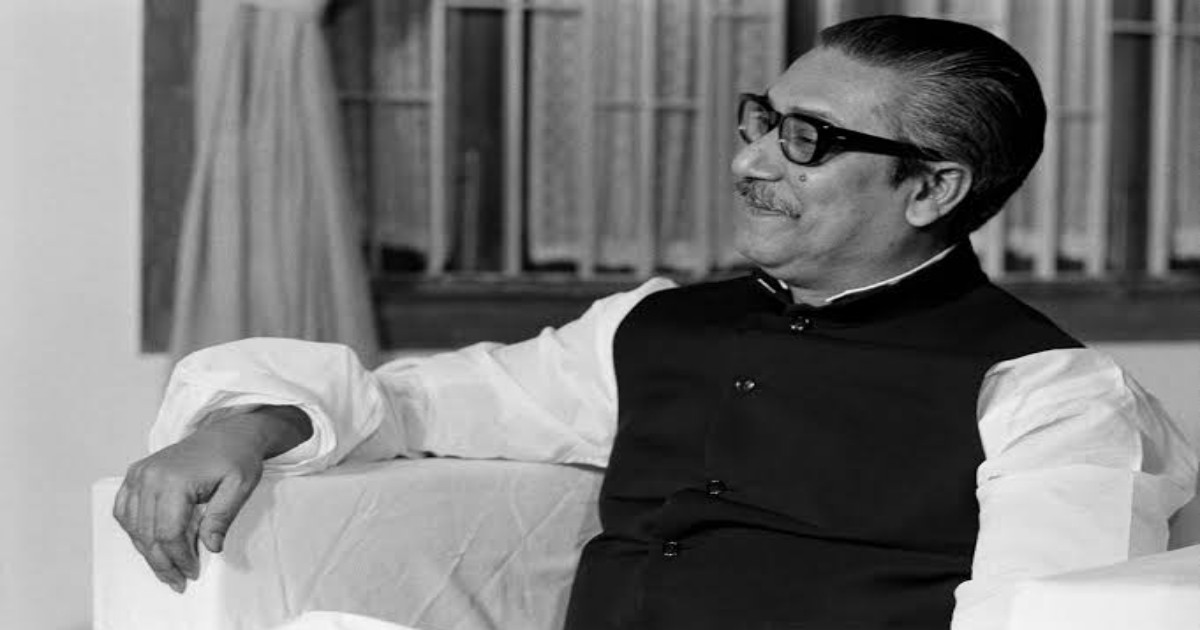
Staff Reporter : Today marks the 104th birth anniversary of Bangabandhu Sheikh Mujibur Rahman, the towering figure in Bangladesh's history and the architect of its independence. Born on March 17, 1920, in Tungipara, Gopalganj, Bangabandhu's life and legacy continue to inspire generations across the nation.
Bangabandhu's birth coincided with a pivotal moment in the subcontinent's history, as the neglect of Bengali rights and voices within Pakistan's political landscape under successive military regimes fueled discontent and laid the groundwork for independence. Against this backdrop, Bangabandhu emerged as the beacon of hope for a nation yearning for self-determination.
Renowned as the "leader of the leaders," Bangabandhu's extraordinary leadership played a pivotal role in shaping Bangladesh's destiny. From his humble beginnings in Tungipara, he displayed remarkable leadership qualities from an early age, eventually becoming the driving force behind Bangladesh's struggle for liberation.
His vision and unwavering commitment to the cause united the people of Bangladesh, inspiring them to fight for their rights and dignity. Bangabandhu's charismatic persona and stirring oratory skills earned him the title of the "poet of politics," as he captivated crowds with his impassioned speeches.
Throughout his political career, Bangabandhu faced numerous challenges and sacrifices. He was arrested multiple times for his activism, including his participation in the movement to recognize Bangla as a state language. His leadership during the tumultuous period of the 1950s and 1960s propelled him to the forefront of Bengali politics.
In 1971, amidst escalating tensions with the Pakistani regime, Bangabandhu galvanized the nation with his call for independence. Despite being arrested by the Pakistan Army, his declaration of Bangladesh's independence on March 26, 1971, ignited the flames of liberation that ultimately led to the birth of Bangladesh on December 16, 1971.
Following Bangladesh's independence, Bangabandhu assumed the mantle of leadership, working tirelessly to rebuild the war-torn nation. However, his unwavering commitment to democracy and economic freedom was tragically cut short when he was assassinated on August 15, 1975, by a group of army officers.
Meanwhile, Awami League (AL) has drawn up elaborate programmes marking the 104th birth anniversary of Father of the Nation Bangabandhu Sheikh Mujibur Rahman and National Children's Day tomorrow.
The programme was announced through an official press release signed by the party's Office Secretary Barrister Biplab Barua.
On the occasion, the national and party flags will be hoisted at 6:30am
tomorrow at the Dhanmondi's Bangabandhu Bhaban, party's central office and its other offices across the country.
Prime Minister Sheikh Hasina will pay homage to Bangabandhu by placing floral wreaths at his portrait at Bangabandhu Museum, the historic house of Dhanmondi road no. 32, at 7 am. Later, national leaders under the leadership of Awami League President and Prime Minister Sheikh Hasina will pay their respects at the tomb of Father of the Nation Bangabandhu Sheikh Mujibur Rahman at 10 am.
At the same time, they will participate in milad and dua mahfil.
On the occasion, prayers will be offered and milad mahfil will be held in all mosques of the country including Baitul Mukarram Mosque after Zohr prayers and all religious institutions as part of the nationwide special prayer programme.
Special prayers will be held at Sabujbagh Dharmarajika Buddhist Maha Bihar at 10am and a prayer meeting will be held at the Dhakeshwari Temple at 11.30am by the Hindu community.
Separate special prayers will be held at the International Buddhist Bihar situated in the city's Merul Badda area at 6pm by the Buddhist community and at Mirpur Baptist Church (3/7 at Senpara, Pawarta, Mirpur-10) at 6pm by the Christian community.
Besides, a discussion has been organized on behalf of the party at Dhaka District Awami League Bhaban in Tejgaon on Monday. AL President and Prime Minister Sheikh Hasina will chair the programme.
ends/Jakir