
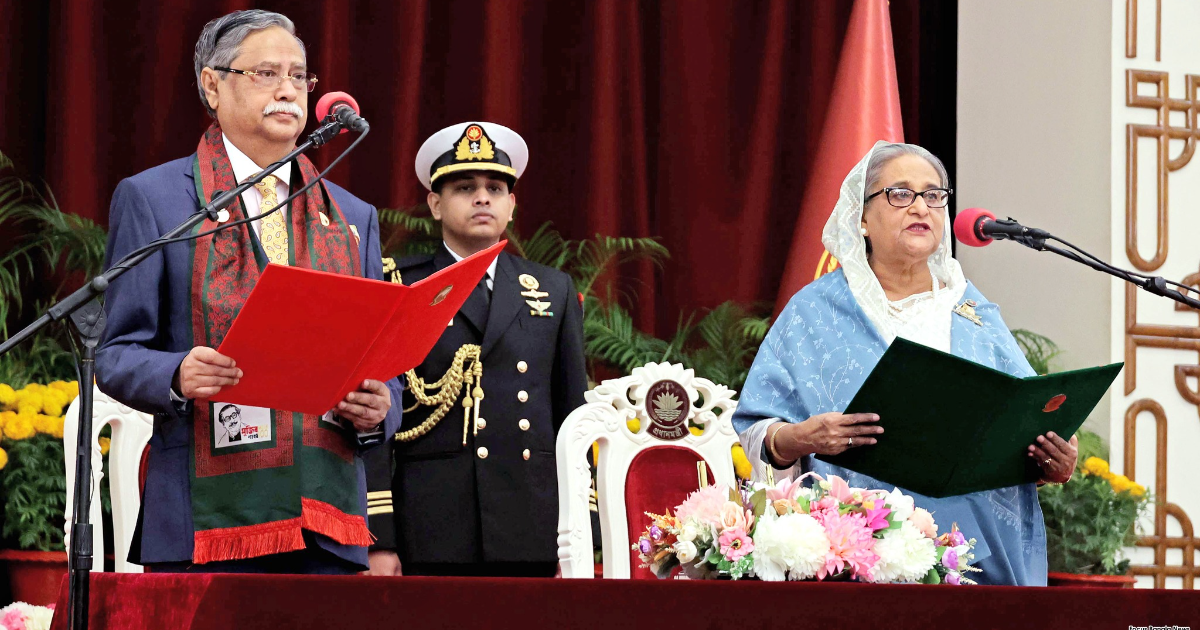
Dhaka, January 14, 2024 - Following the recently held January 7 parliamentary polls, the Awami League (AL)-led government in Bangladesh is actively concentrating on strengthening diplomatic ties, particularly with Western countries such as the United States and the United Kingdom. Securing a remarkable fourth consecutive term under President Sheikh Hasina, the AL's resounding victory has solidified its position within the government despite ongoing efforts by the Bangladesh Nationalist Party (BNP).
In light of economic challenges ahead, the AL government is placing significant emphasis on bolstering international alliances. Bangladesh's strategic geographical location has already positioned it favorably on the global stage, but the government recognizes the need to further fortify diplomatic ties, especially with influential Western nations.
Insiders from the AL reveal that the primary challenge faced by the newly inaugurated government is economic, with key sectors like the Ready-Made Garments (RMG) industry intricately linked with Western markets. To address this, a significant reshuffle in the cabinet has taken place, appointing Dr. Hasan Mahmud, the party's joint general secretary, as the new foreign minister. This move aims to bring about a qualitative transformation within the ministry, acknowledging its pivotal role in the current global landscape.
Dr. Hasan Mahmud, the newly appointed Foreign Minister, expressed confidence in Bangladesh's trajectory towards prosperity and development under Prime Minister Sheikh Hasina's leadership. "We are committed to fostering stronger relations with both the East and the West, promoting further development," he affirmed, emphasizing the foundational principle of Bangladesh's foreign policy as "friendship to all, malice towards none."
AL International Affairs Secretary Shammi Ahmed echoed this sentiment, expressing optimism about the government's prioritization of enhancing relations with influential nations. Dr. Amena Mohsin, a professor of International Relations at Dhaka University, emphasized the imperative need to strengthen ties with all nations in a globalized world to overcome the economic challenges faced by Bangladesh.
However, the AL-led government's decision to unilaterally hold the 12th parliamentary elections, with the main opposition party BNP boycotting due to the government's refusal to demands for neutral administrative management, has raised concerns. Both the United Nations and the United States recommended inclusive participation of all political parties, including BNP, in the polls. The government's unilateral decision may influence international responses and add complexity to its current diplomatic focus on strengthening ties with the West. The potential imposition of sanctions on Bangladesh by Western nations remains a concern, highlighting the delicate balance the government must navigate in its pursuit of international alliances.