
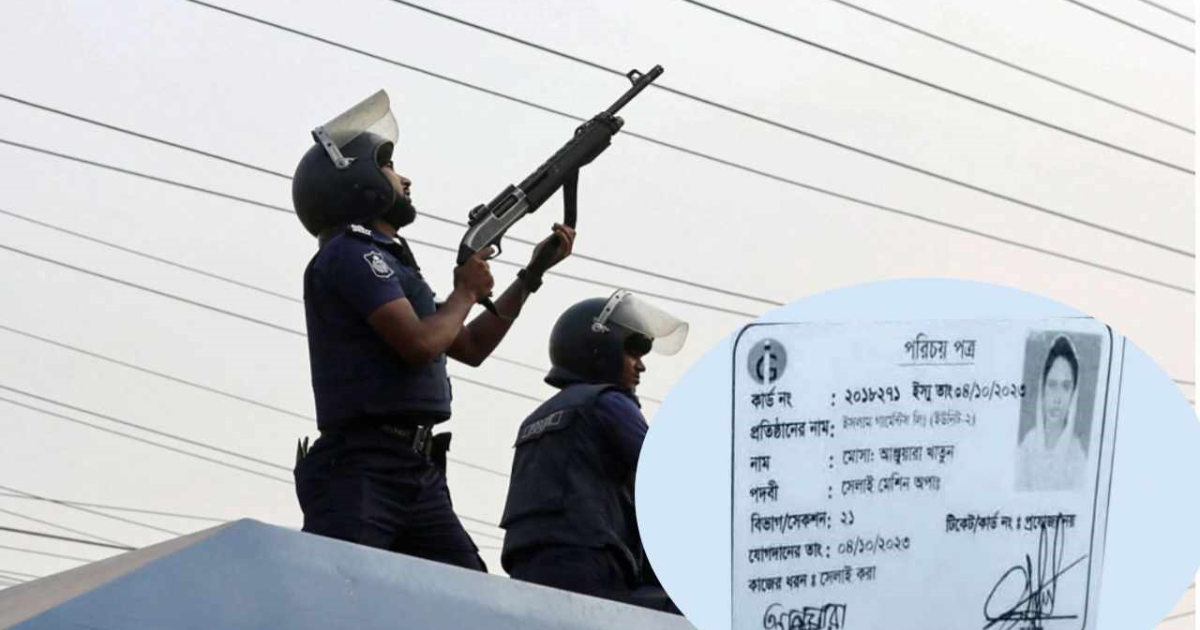
In a heart-wrenching turn of events, the life of a 24-year-old female Ready Made Garment (RMG) worker was abruptly cut short in a violent clash between the police and workers in the Konabari area of Gazipur, Bangladesh.
Anjuara Begum, hailing from Char Natipara under Kazipur upazila in Sirajganj, met an untimely demise during a demonstration against the government's recently declared minimum wage for the RMG sector.
According to local witnesses, the clash erupted on Wednesday morning as the workers vehemently rejected the government's proposed minimum wage of Tk 12,500, demanding a substantial increase to Tk 23,000 per month. As the demonstration gained momentum, the situation escalated rapidly, with the police resorting to rubber bullets, sound grenades, and teargas shells.
During the chaos, Anjuara Begum was caught in the crossfire, succumbing to injuries sustained during the clash. Further exacerbating the tragedy, at least 10 other workers were reported to be injured, with two in critical condition. These two were rushed to the Dhaka Medical College Hospital (DMCH), where one of them, unfortunately, couldn't be saved, as confirmed by DMCH police outpost in-charge Bachchu Mia.
"The duo was brought to DMCH at about 12:30pm," stated Mia, "and added that the remaining injured RMG worker is currently undergoing treatment at the hospital.
The government's announcement of the minimum wage on Tuesday failed to meet the demands of the protesting workers, leading to the culmination of weeks-long agitation, marked by intense clashes and aggressive police action. This recent fatality adds to the grim tally, underscoring the pressing need for effective measures to address the concerns of the labor force.
Bangladesh, a significant global hub for garment manufacturing, has long been grappling with labor rights issues, including substandard working conditions and inadequate wages. While the government's efforts to address these concerns are commendable, the recent events have highlighted the urgency for comprehensive dialogues and effective policy implementations that ensure the well-being and safety of the country's workforce.
As the nation grapples with this tragic incident, it serves as a stark reminder of the critical need for a collaborative approach between the government, industry stakeholders, and labor representatives to ensure sustainable and equitable practices within the RMG sector. Efforts to prioritize the welfare of workers must remain at the forefront of any policy decisions, mitigating the possibility of further casualties in the pursuit of fair labor practices and social justice.